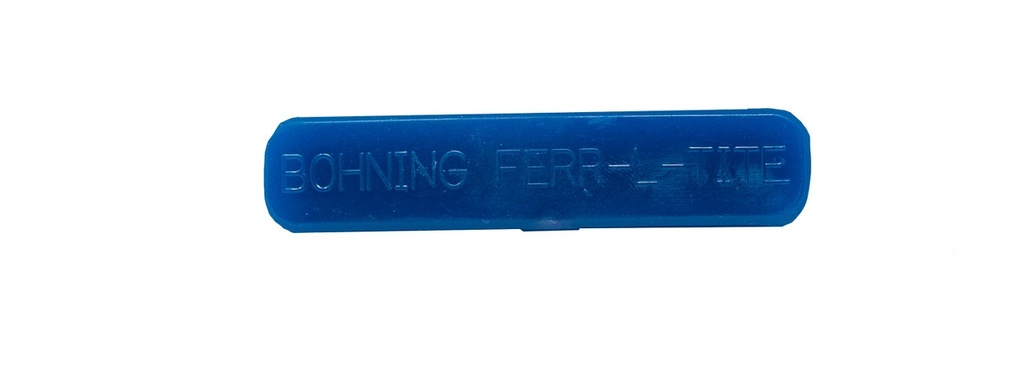
Bohning Ferr-L-Tite Cool Flex is a flexible hot-melt adhesive specially developed to securely and durably bond arrow points, inserts, outserts and pin bushings to carbon shafts, without the adhesive becoming brittle or cracking on target contact. Ferr-L-Tite Cool Flex is a hot-melt adhesive with a lower melting point than conventional Ferr-L-Tite variants. This makes it ideally suited for carbon arrows, though it can also be used on aluminium or fibreglass shafts. When heated, the glue stick melts and firmly bonds inserts, points or outserts to the shaft. After cooling, the adhesive is fully cured within a few minutes, providing a flexible yet stable bond.
Features
Specially optimised for carbon arrows: Ferr-L-Tite Cool Flex was specifically developed for use with carbon arrow shafts.
Flexible bond: The special formula prevents the adhesive from becoming brittle or cracking after repeated impacts.
Easy to work with: Melt with a flame for installation, but hot water is sufficient for adjustment or removal.
Fast curing: Cool Flex is fully cured in approximately five minutes at room temperature.
Versatile: Suitable for bonding points, inserts, outserts and pin bushings.
No expiry date: The adhesive can be stored for a long time without ageing or becoming unusable.
Technical Specifications
Application: Bonding of points, inserts, outserts and pin bushings
Designed for: Carbon shafts (also works on aluminium & fibreglass)
Curing: Fully cured in approx. 5 minutes at room temperature
Melting point: Approx. 137.8 °C (280 °F)
Application: Requires flame for melting, warm water for easy removal
Includes
1 × Bohning Ferr-L-Tite Cool Flex
Note When used with carbon arrows, a specifically developed adhesive such as Ferr-L-Tite Cool Flex is worthwhile, as conventional hot-melt adhesives can become brittle due to the enormous energy absorption on target contact. The lower melting temperature and the flexible long-term bond minimise the risk of adhesive failure after repeated shooting. When working with carbon shafts, note that excessive heat can damage the carbon surface – therefore gentle heating and the use of a suitable flame or hot water is recommended.